
sábado, 19 de agosto de 2017

Class #2 - Simple Present vs. Present Continuous Tense

Vocabulary
Image result for apron
APRON

BATHTUB

SINK

BROKEN CUP

DISH DETERGENT

KITCHEN SPONGE

DISHES

DISH RACK

RUBBER GLOVES

RUBBER DUCK

TOWELS / TOWEL RACK

BUCKET

MOP

FLOOR


(ORDINARY) SOAP

OVEN MITTS

POT

PANS AND POTS

SPAGHETTI

STOVE

VEST

LAWN CHAIR

GREEN

ORANGE


PURPLE

PINK

Image result for yellow
YELLOW


Song: "They're doing funny things today, they never do these things this way
They're side by side"

Doing the dishes

WIS: What are you doing?
WIA: I'm washing the dishes in the bathtub.
WIS: That's strange. Do you usually wash the dishes in  the bathtub?
WIA: No! I never wash the dishes in the bathtub. But I'm washing the dishes in the bathtub today.
WIS: Why are you doing that?
WIA: Because my sink is broken.
WIS: I'm sorry to hear that.

WIA: woman in apron
WIS: woman in shirt

Washing the kitchen floor

C: Hi Tim!
T: Oh, hi Charles.
C: Tim, what are you doing?
T: I'm washing my kitchen floor.
C: But you're using ordinary soap.
T: So? I always use ordinary soap. Don't you use ordinary soap when you wash your kitchen floor?
C: Never. I use "Sparkle". Here, Tim. I have some with me. Let's try it on your floor right now.
T: Wow! look at this floor! It's shining.
C: It always shines with "Sparkle".
T: No more ordinary soap for me.
Voice over: Floors always shine with "Sparkle".
C: Charles
T: Tim

At the office

MS: What's Fran doing?
WS: She's working late.
MS: Working late? Why is she doing that?
WS: It's Monday. She always works late on Monday.

MS: man singing
WS: woman singing

In the kitchen

MIPV: What's Bob doing?
MIBV: He's cooking spaghetti.
MIPV: Cooking spaghetti? Why is he doing that?
MIBV: It's Wednesday. He always cooks spaghetti on Wednesday.

MIPV: man in purple vest
MIBV: man in blue vest

In the backyard

WS: What's Gary doing?
MS: He's bathing his cat.
WS: Bathing his cat? Why is he doing that?
MS: It's Friday. He always bathes his cat on Friday.

MS: man singing
WS: woman singing
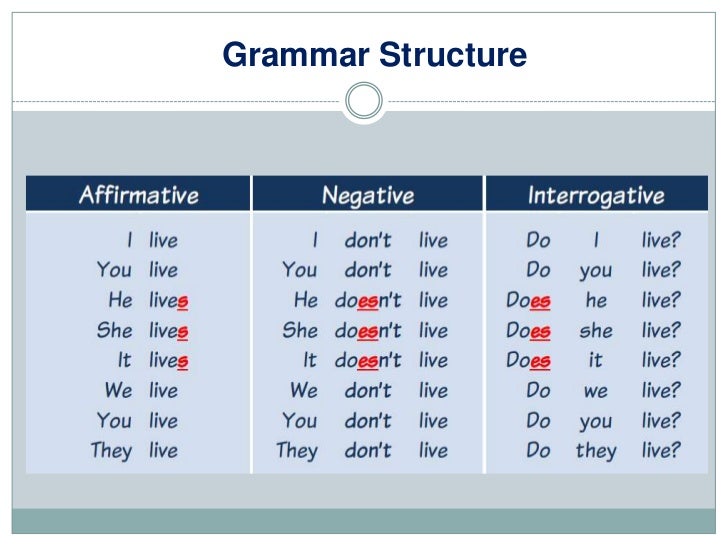


Image result for simple present tense


The Present Continuous Tense
X
The Simple Present Tense


Compare these two situations:


In the picture on the left, the boy is talking about what he is doing right now, so he uses the present continuous tense.

In the picture on the right, he is talking about what he does every day, so he uses the simple present tense.

--> The present continuous tense is used to express actions in progress.
--> The simple present tense is used to express habitual actions.


Simple Present
Present Progressive
in general (regularly, often, never)
Colin plays football every Tuesday.
present actions happening one after another
First Colin plays football, then he watches TV.
right now
Look! Colin is playing football now.
also for several actions happening at the same time
Colin is playing football and Anne is watching.
Signal words
  • always
  • every ...
  • often
  • normally
  • usually
  • sometimes
  • seldom
  • never
  • first
  • then
  • at the moment
  • at this moment
  • today
  • now
  • right now
  • Listen!
  • Look!
Note: The following verbs are usually only used in Simple Present:
be, have, hear, know, like, love, see, smell, think, want


sábado, 12 de agosto de 2017

Class #1: A Day At The Beach

Vocabulary


BEACH


DAY

GIRL                                          BOY


ORANGE JUICE


TREASURE


A day at the beach


Woman: It’s very nice here.
Man: Yes, the weather is wonderful.
        I’m thirsty!
Woman: Well, it is hot today.
Man: I am very lucky!
        A blue sea, white sand, and a beautiful girl.
Woman: And a very cold orange juice.
Man: Oh, darling. You are a treasure.
Woman: Yes, I know. Here you are.

Read the conversations below:
Ken: Hello, My name's Ken. What's your name?
Jack: Jack. How are you?
Ken: I'm fine, and you?
Jack: Great. Where are you from?
Ken: I'm from Seattle.
Ken: Where is that girl from?
Jack: She's from Japan
Ken: How old is she?
Jack: She's twenty-six


Demonstrative Pronouns - This and That

We use this and that with singular and uncountable nouns: 
Try to repeat this exercise every morning and evening. (this + singular countable noun)
What does this music make you think of? (this + singular uncountable noun)
I’ve never been to that part of France. (that + singular countable noun) 
Can I have some of that juice, please? (that + singular uncountable noun)
We use this most commonly to point to things and people that are close to the speaker or writer, or things that are happening now:

Can I use this knife here? 

[pointing to something]

Is this your sister? 

We use that most commonly to point to things and people which are not easy to identify in a situation. They are often more distant from the speaker, and sometimes closer to the listener:

[pointing to something]

What's in that bottle over there? 

Sometimes they are not visible to either the speaker or listener:

New York! That’s my favorite place!

Using articles: A/AN and THE

What is an article? Basically, an article is an adjective. Like adjectives, articles modify nouns.
English has two articles: the and a/anThe is used to refer to specific or particular nouns; a/an is used to modify non-specific or non-particular nouns. We call the the definite article and a/an the indefinite article.
the = definite article
a/an = indefinite article
For example, if I say, "Let's read the book," I mean a specific book. If I say, "Let's read a book," I mean any book rather than a specific book.
Here's another way to explain it: The is used to refer to a specific or particular member of a group. For example, "I just saw the most popular movie of the year." There are many movies, but only one particular movie is the most popular. Therefore, we use the.
"A/an" is used to refer to a non-specific or non-particular member of the group. For example, "I would like to go see a movie." Here, we're not talking about a specific movie. We're talking about any movie. There are many movies, and I want to see any movie. I don't have a specific one in mind.
Let's look at each kind of article a little more closely.

Indefinite Articles: a and an

"A" and "an" signal that the noun modified is indefinite, referring to any member of a group. For example:
  • "My daughter really wants a dog for Christmas." This refers to any dog. We don't know which dog because we haven't found the dog yet.
  • "Somebody call a policeman!" This refers to any policeman. We don't need a specific policeman; we need any policeman who is available.
  • "When I was at the zoo, I saw an elephant!" Here, we're talking about a single, non-specific thing, in this case an elephant. There are probably several elephants at the zoo, but there's only one we're talking about here.

Remember, using a or an depends on the sound that begins the next word. So...

  • a + singular noun beginning with a consonant: a boy; a car; a bike; a zoo; a dog
  • an + singular noun beginning with a vowel: an elephant; an egg; an apple; an idiot; an orphan
  • a + singular noun beginning with a consonant sound: a user (sounds like 'yoo-zer,' i.e. begins with a consonant 'y' sound, so 'a' is used); a universitya unicycle
  • an + nouns starting with silent "h": an hour
  • a + nouns starting with a pronounced "h": a horse 
      • In some cases where "h" is pronounced, such as "historical," you can use an. However, a is more commonly used and preferred.
        A historical event is worth recording.